
Ohio Launches Traffic Management System for Drone Operations
Sean Calhoun • March 26, 2024
System to enhance safety for low altitude drone flights
Columbus, OH
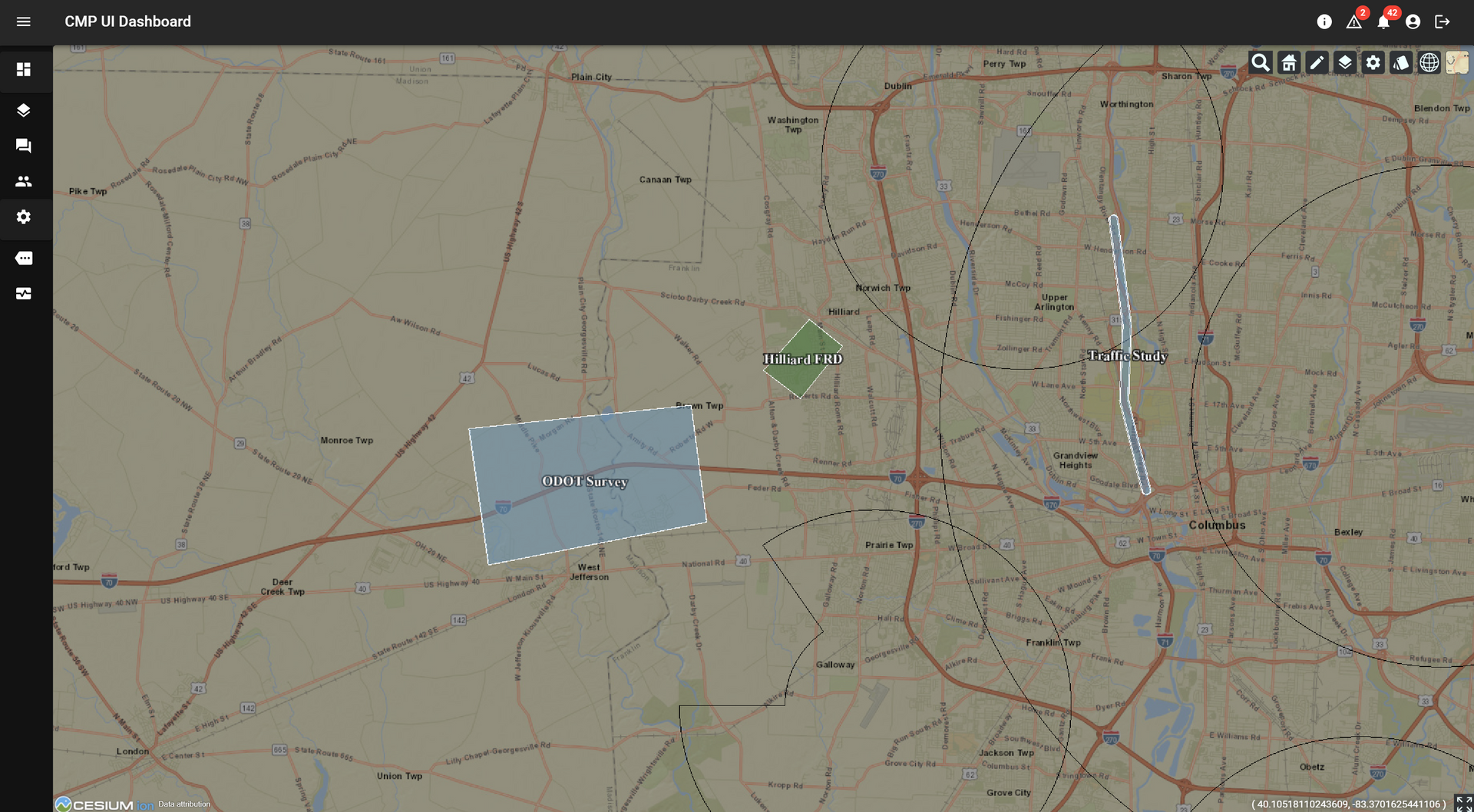
– CAL Analytics, in coordination with the Ohio Department of Transportation (ODOT), has launched a low-altitude air traffic management system for drones to support statewide operations. As the number of uncrewed aircraft systems (UAS), or drones, grows, a robust system for managing the low-altitude airspace where these aircraft operate is necessary to ensure safety. While the Federal Aviation Administration (FAA) provides air traffic control for traditional aircraft flying in certain airspaces, low-altitude traffic management for drones is the responsibility of individual operators. Currently, drone pilots are required to keep the aircraft within sight to avoid a collision. A UAS Traffic Management (UTM) system enhances safety by enabling sharing of flight details between UAS operators, providing a digital tool for flight planning, and allowing operators to eventually operate beyond visual line of sight (BVLOS) while continuing to minimize the risk of collision.
“The introduction of this vital capability continues Ohio’s tradition of innovation in the aviation community while prioritizing safety,” said Rich Fox, director of the Ohio UAS Center at ODOT. “As we collaborate with others at the newly opened National Advanced Air Mobility Center of Excellence, we expect this to be the first of many industry-leading activities coming out of that state-of-the-art facility.”
Following several state sponsored research efforts to determine the best way to develop and deploy traffic management for uncrewed aircraft in Ohio, this system, implemented by CAL Analytics, provides interoperability where any user can enroll to share and receive flight information. As drone technology continues to advance, traffic management will be a key enabler of BVLOS operations, which currently require special permission from the FAA once stringent safety requirements are met.
“We couldn’t be more thrilled to continue our collaboration with ODOT by deploying this discovery and synchronization services to fully realize this first of a kind operational UTM capability throughout the state of Ohio,” said Dr. Sean Calhoun, managing director of CAL Analytics. “This realization is the result of a lot of industry development, including the essential work from The Ohio State University research team and sponsored research from the Ohio Federal Research Network (OFRN). We are looking forward to working with the various interested stakeholders throughout the state and the FAA to learn from this system and to start scaling UAS operations throughout Ohio.”
ODOT and the City of Hilliard will be the first organizations to enroll in the system and begin exchanging information as they look to leverage UAS as a tool for everything from inspection and traffic monitoring to onsite situational awareness for first responders, such as police and fire department dispatches.
“Hilliard is excited to leverage this and other airspace services that Ohio has established to enable our first responder drone operations” says Deputy Police Chief for Hilliard, Ron Clark. “These services will be critical for us to achieve FAA approval and operate our drones in a safe and effective manner.”
In the coming years, more advanced and BVLOS drone operations will increase in Ohio, which means multiple operators may be flying in the same area to deliver medical supplies, perform emergency services, conduct infrastructure inspections, and even deliver commercial packages. For safe and successful scaling of commercial drone operations, it’s imperative that pilots have situational awareness for strategic deconfliction.
While both private and public organizations can enroll in the traffic management system, this resource is particularly valuable for other state agencies and local governments across Ohio. These services are available at no cost to any operator or fleet manager that requests access and goes through the onboarding process. To learn more or request access, please contact CAL Analytics at info@calanalytics.com.
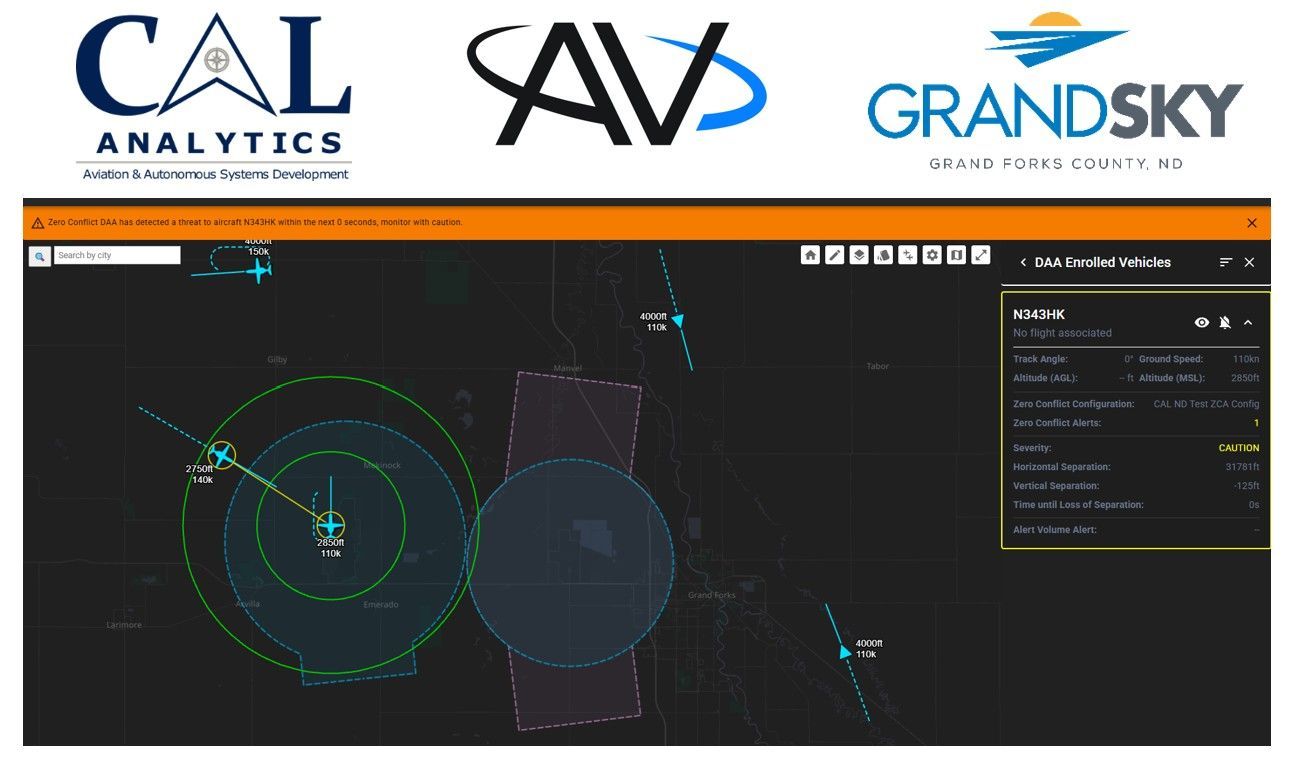
CAL and AV Execute Multi-year Agreement with GrandSKY to Deliver Ground-Based Detect and Avoid for Group 1–5 BVLOS UAS Operations
The milestone strengthens CAL’s AtlasAI platform for safer, scalable BVLOS drone operations under the FAA’s proposed Part 108 framework.
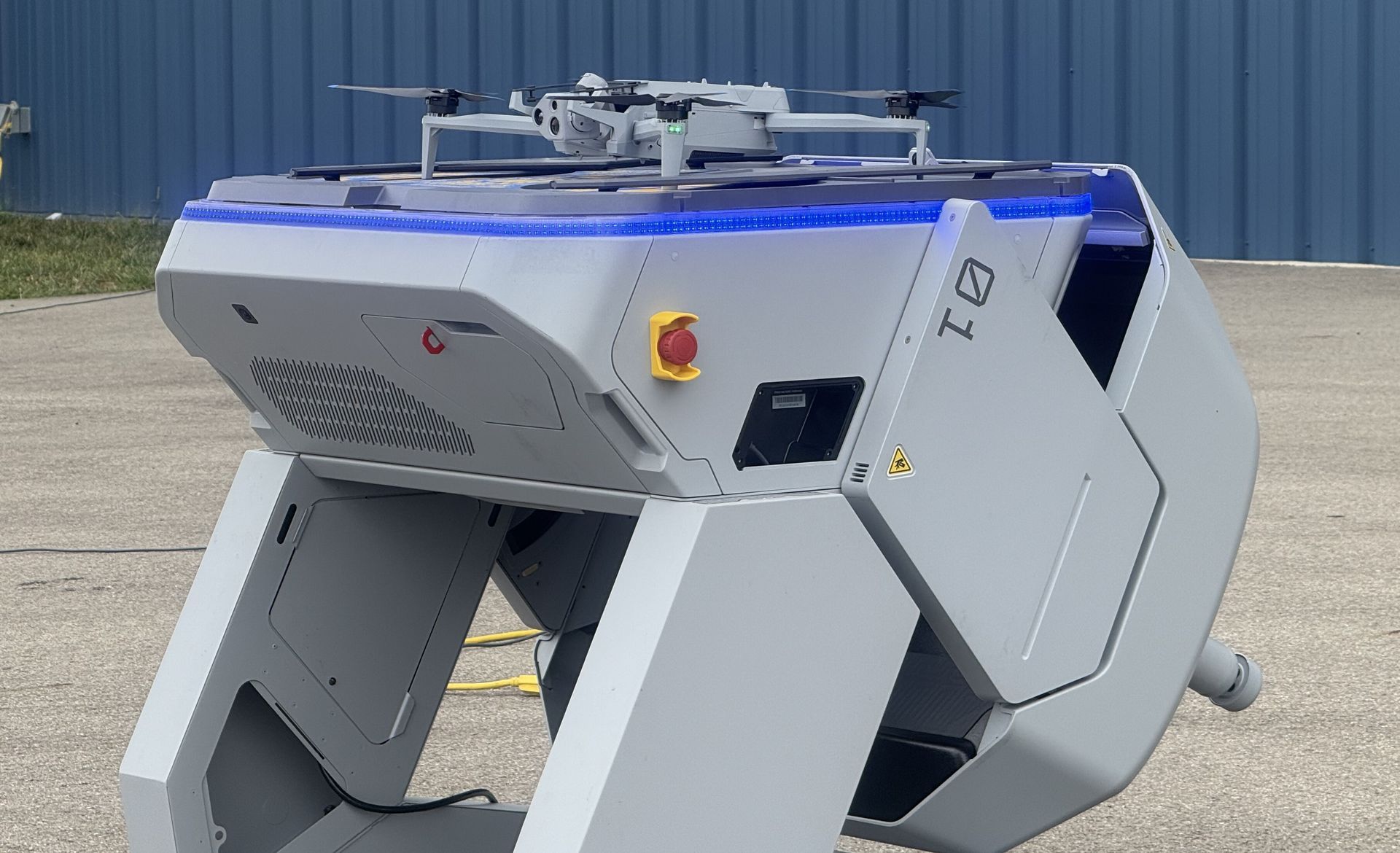
COLUMBUS, OH (February 9, 2026) — Ohio continues to lead the nation in modernizing emergency response with the selection of nine public safety agencies to participate in the Ohio Statewide Drone First Responder (DFR) Pilot Program , a first-of-its-kind initiative designed to expand rapid aerial response capabilities across communities of all sizes. The program, led by the Ohio Department of Transportation (ODOT) and DriveOhio, with program management support from SkyfireAI, reflects Ohio’s commitment to equipping first responders with innovative tools that improve situational awareness, enhance officer and responder safety, and reduce emergency response times. The following agencies have been selected to participate in the pilot program: City of Springfield Police/Fire/EMS Athens Police Department Lima Police Department Toledo Police Department Violet Township Fire/EMS Austintown Fire Department City of Hamilton Police/Fire/EMS Amherst Police Department Kelleys Island Fire/EMS Together, these agencies represent a diverse cross-section of Ohio, spanning urban centers, suburban communities, and rural jurisdictions — reinforcing the program’s goal of ensuring access to advanced emergency response capabilities statewide. Many of the selected agencies have also committed to sharing drone resources with neighboring jurisdictions, further expanding the impact of this program. “Ohio is committed to giving our first responders the tools they need to protect lives and serve their communities safely and effectively,” said Governor Mike DeWine . “This statewide Drone First Responder pilot reflects Ohio’s leadership in innovation, our strong partnership with local agencies, and our focus on using technology responsibly to support public safety across the state.” Created under Ohio House Bill 96, the Ohio Statewide DFR Pilot Program enables participating agencies to deploy state-approved, NDAA-compliant drone systems capable of rapid launch, real-time video streaming to command staff, and integration into Ohio’s emerging uncrewed aircraft traffic management framework, led by Ohio-based CAL Analytics. “We are enthusiastic supporters of DFR program and thankful for the efforts of so many Ohio leaders to accelerate this program into the execution phase,” said State Representative Adam Holmes , who championed the program's inclusion in the bill. “The DFR program will greatly enhance first responder effectiveness and will provide increased support for all Ohioans. A tremendous capability for our priceless first responders.” “Ohio is leading the way for the nation with the first statewide DFR program! Our ODOT leaders are setting the stage for an integrated network of DFR assets that will undoubtedly save lives and resources and be a force-multiplier for our undermanned first responder organizations,” said State Representative Bernard Willis , Chair of the House Transportation Committee. “In Ohio, the HOME of aviation we are the BEST at making historic innovations with flying machines, and we will NEVER stop leading the way!” With technology known as drone-in-a-box, a drone can be launched from a permanent docking site and be flown remotely to a scene. These pre-positioned drones provide real-time visual information to aid decision-making, and some can also drop critical medical supplies to the scene of an emergency. The program emphasizes operational readiness, standardized training, and responsible use, while maintaining a strong focus on community engagement and transparency. “This program is about thoughtful implementation, not experimentation,” said Richard Fox, Director of the DriveOhio UAS Center . "By coordinating procurement, training, and regulatory support at the state level, Ohio is creating a scalable model that benfits communities of every size. We're grateful for the confidence the legislature has in ODOT to execute this groundbreaking program." SkyfireAI, a national leader in public safety drone program development and FAA regulatory integration, is supporting the initiative as program manager, working closely with ODOT, DriveOhio, and participating agencies to ensure consistent standards and successful deployment. “The selection of these nine agencies reflects the strength of Ohio’s public safety community and the seriousness with which this program has been approached,” said Don Mathis, Co-Founder and CEO SkyfireAI . "This pilot lays the foundation for how states can responsibly scale DFR programs today — and prepare for future capabilities as technology continues to evolve." Selected agencies will participate in a structured onboarding process beginning in early 2026, including hands-on vendor demonstrations, training, and program coordination. Operations are expected to begin in Spring 2026 and continue for approximately a year. The pilot program will evaluate operational effectiveness, response outcomes, and opportunities for future expansion. Ohio’s Statewide Drone First Responder Pilot Program has already drawn national attention as a potential blueprint for other states seeking to modernize emergency response while maintaining strong governance, safety, and public trust. ### About CAL Analytics: CAL Analytics is a small business focusing on the development of aviation and autonomous systems. Located in Dayton, OH and founded in 2010, CAL has expertise in navigation systems, remote sensing, signal analysis, and information fusion. CAL is a leader in UAS Traffic Management (UTM) and Advanced Air Mobility (AAM) technology, offering airspace management, mission management, detect and avoid, and in-time system-wide safety assurance (ISSA) solutions. Our mission is to provide agile and rigorous approaches to bring new technologies to the world. More information at calanalytics.com About SkyfireAI: SkyfireAI is an AI-native drone technology company redefining mission-scale autonomy for public safety, defense, and enterprise markets. Our cloud-connected and edge-enabled software platform powers autonomous swarming, Beyond Visual Line of Sight (BVLOS) operations, and real-time AI analytics—unlocking faster response, smarter decision-making, and safer operations. Built for scalability, SkyfireAI’s solutions deliver repeatable, high-value outcomes across thousands of missions, positioning the company to capitalize on a rapidly expanding global uncrewed systems market projected to exceed $100 billion by 2030. More information is available at skyfireai.com . About ODOT’s DriveOhio Initiative: DriveOhio is the state’s center for smart mobility, advancing connected, automated, shared, and electric transportation. The UAS Center, located in Springfield, OH, is the statewide resource for uncrewed aircraft systems testing, integration, and operations.